-
Jack Frost, Mischief Maker
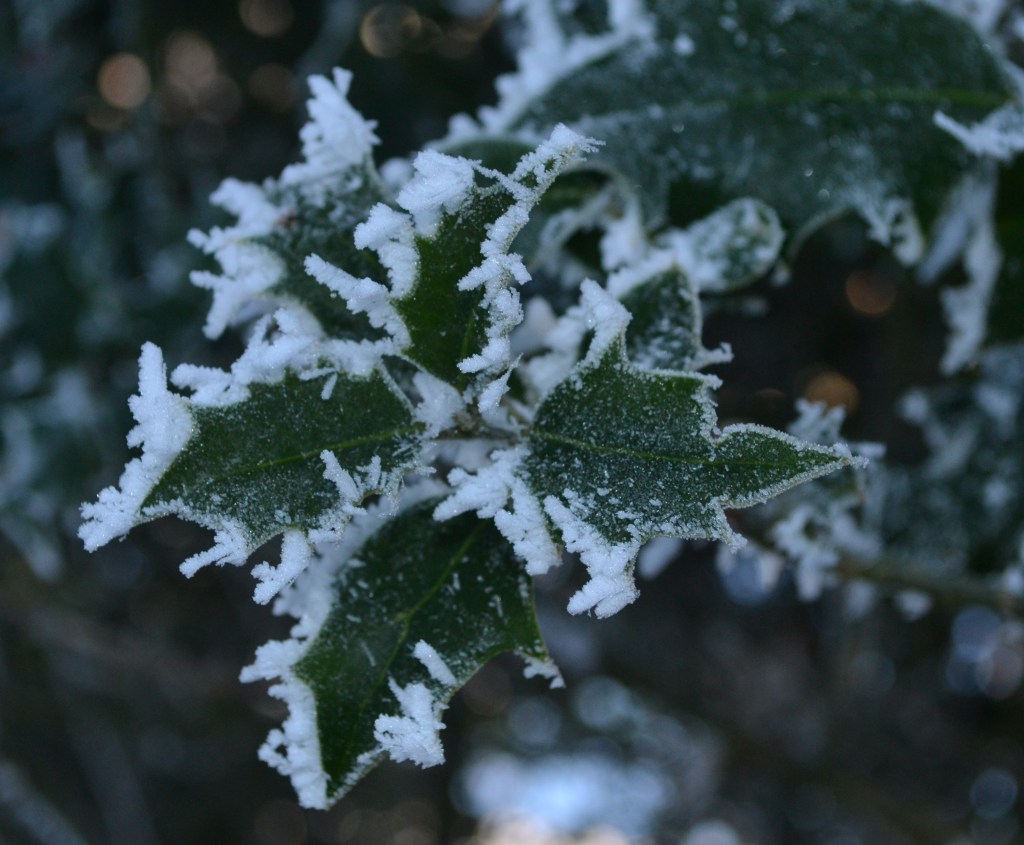
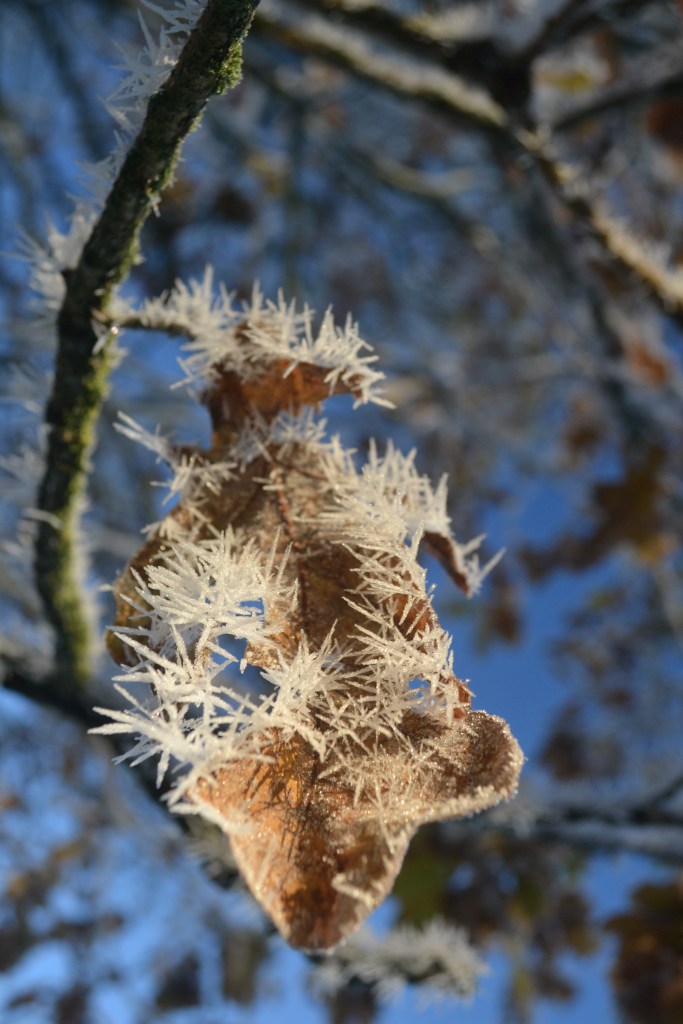
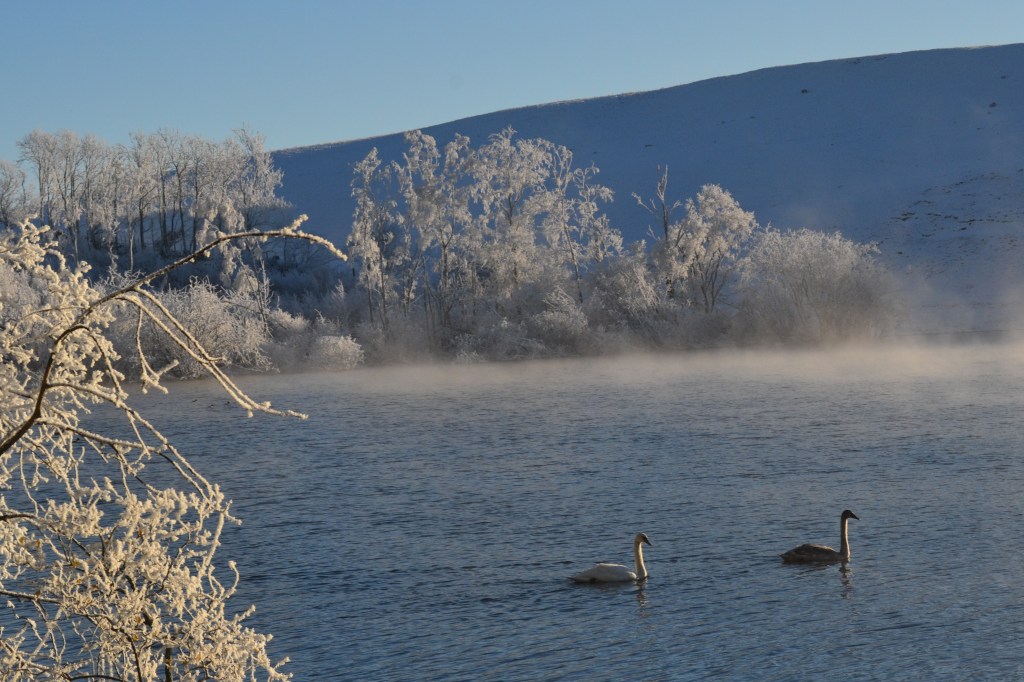
The mischievous Jack Frost has been out creating his magic while we have slept. Covering trees and other objects with white feathery ice crystals, hoar frost, creating a surreal landscape.

The name is derived from the Old English, har, meaning white or grey with age as the frost looks like white hairs.
And now the science bit……
The feathery crystals are formed when water vapour in the air comes into contact with a surface that is below freezing. Immediately ice crystals are formed and continue to grow as more vapour freezes causing this beautiful phenomenon lighting up when the morning sun hits it.

-
Winter Wonderland

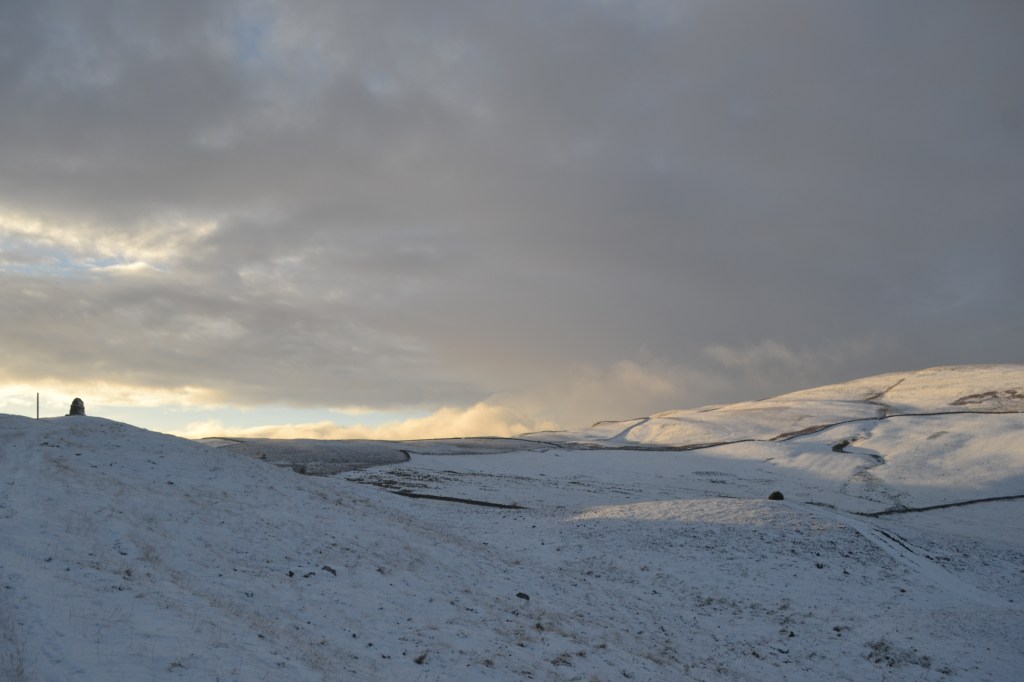
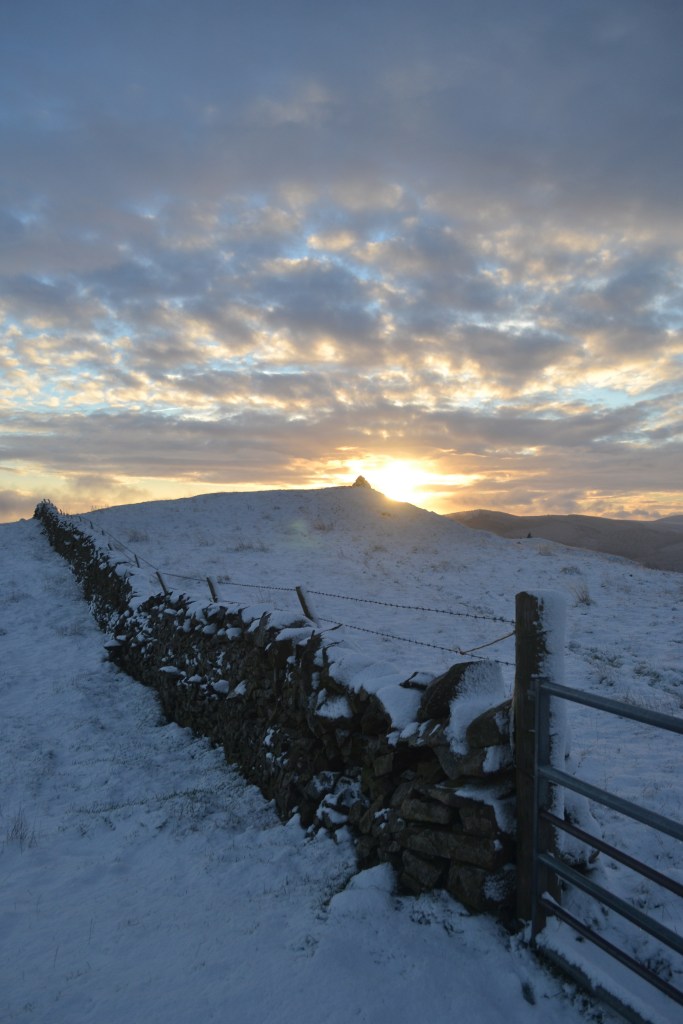
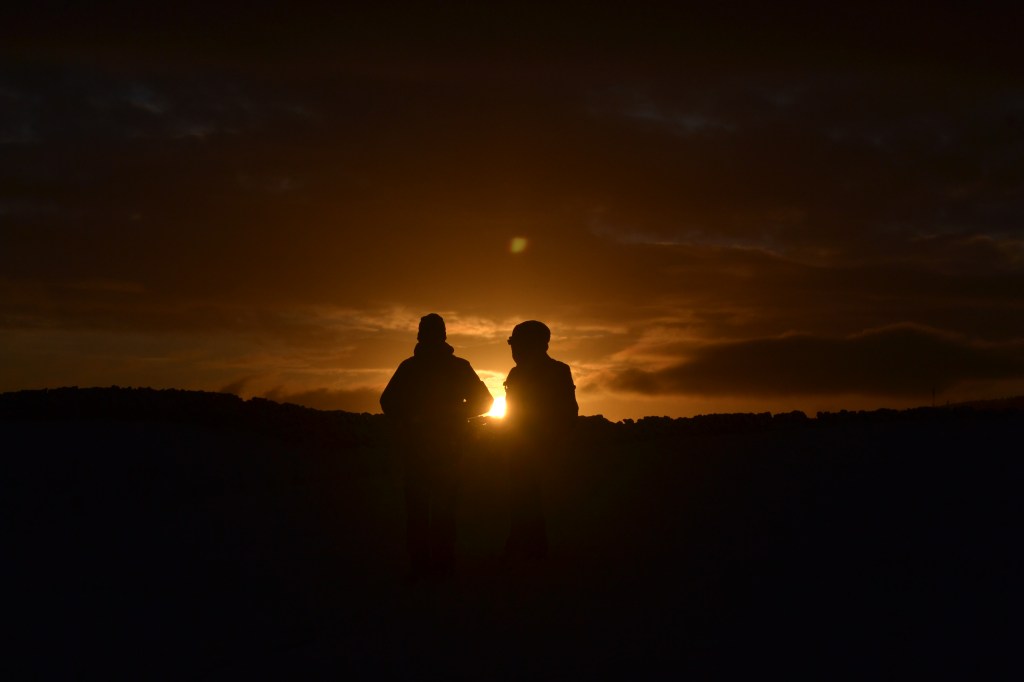
The first snows of winter have now arrived in the Scottish Borders covering the landscape in a blanket of white.
This gives us a great opportunity to wrap up warm, head out and immerse ourselves in the countryside which now looks so different from what we are used to seeing. It can make walking hard work but enjoy the sound of the snow crunching under your boots with every step you take. On looking back, you will see your footprints vanishing into the distance.
Make sure that you have a flask with you so that you can enjoy a nice cuppa and a wee mince pie because you have earned it!!
-
Last Posting Dates for Christmas
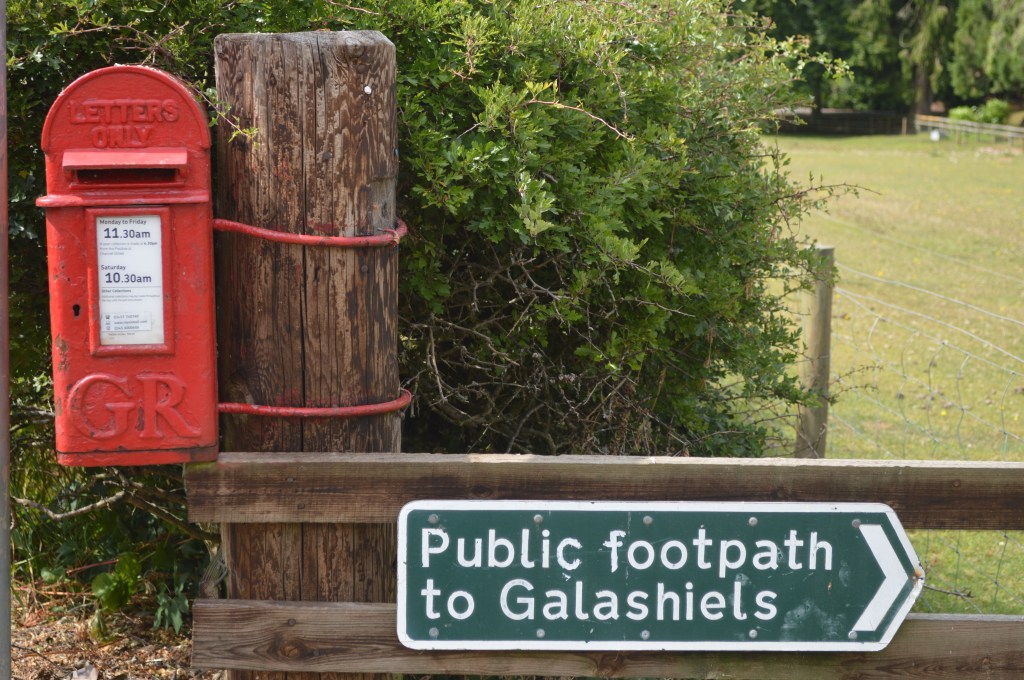
Today is the last day for 2nd Class postage and Friday for 1st Class.
From today until Christmas Eve we will be sending all our orders out 1st Class!
Be aware that the planned strikes by Royal Mail will affect delivery times.
-
Walking about
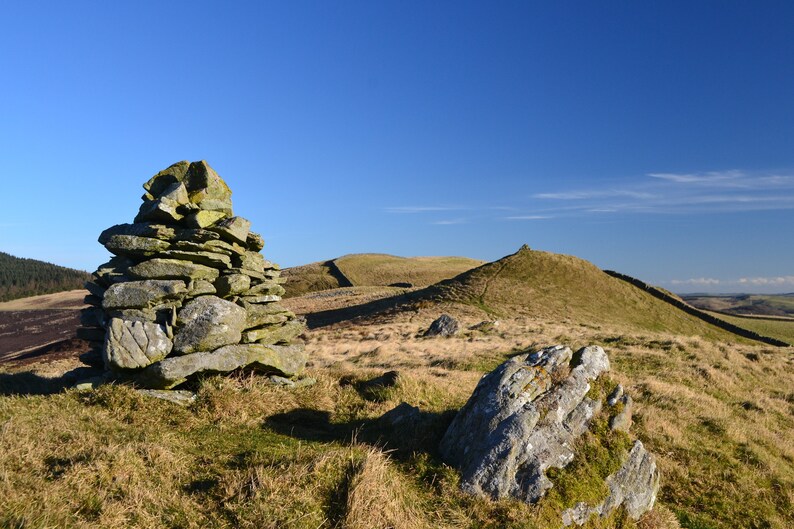
We went walking most weeks and discovered areas that we had never been to before that were accessible from our respective homes. This then developed into an embryonic idea of walks from the local stations on the newly opened Borders Railway.
There was a lot of time spent pondering over OS maps, drinking tea and looking for new areas to explore. By getting our boots on the ground we discovered new places, rediscovered previous walks and learnt a lot about the history and folklore of the area.
As the project gathered momentum, we realised that nobody had written a book about walking from the stations in the Scottish Borders and we were keen to share our knowledge so that other people could benefit from it.
After two and a half years our vision became a reality when we self-published Border Station Walks in 2020 and were surprised, and flattered, that people wanted to buy the book and even shops wanted to stock it!!
Inspired by this success we embarked on doing another book, Midlothian Station Walks which is currently close to being finished and will be published early next year. It is covers walks from the Shawfair, Eskbank, Newtongrange and Gorebridge stations and again has been a voyage of discovery in an area that we had never previously walked.
On a cold day in February, we were out walking in the Gorebridge area when we got chatting to a lone mountain biker who had stopped to look at an unusual breed of goats at Camp Wood Farm.
It transpired that John Nicol, was a design director at Industry Cottage Ltd, based in Gorebridge and we were researching walks for a book. This was obviously serendipity at work and with his enthusiasm for our project we started working together which has taken us far from our humble beginnings.
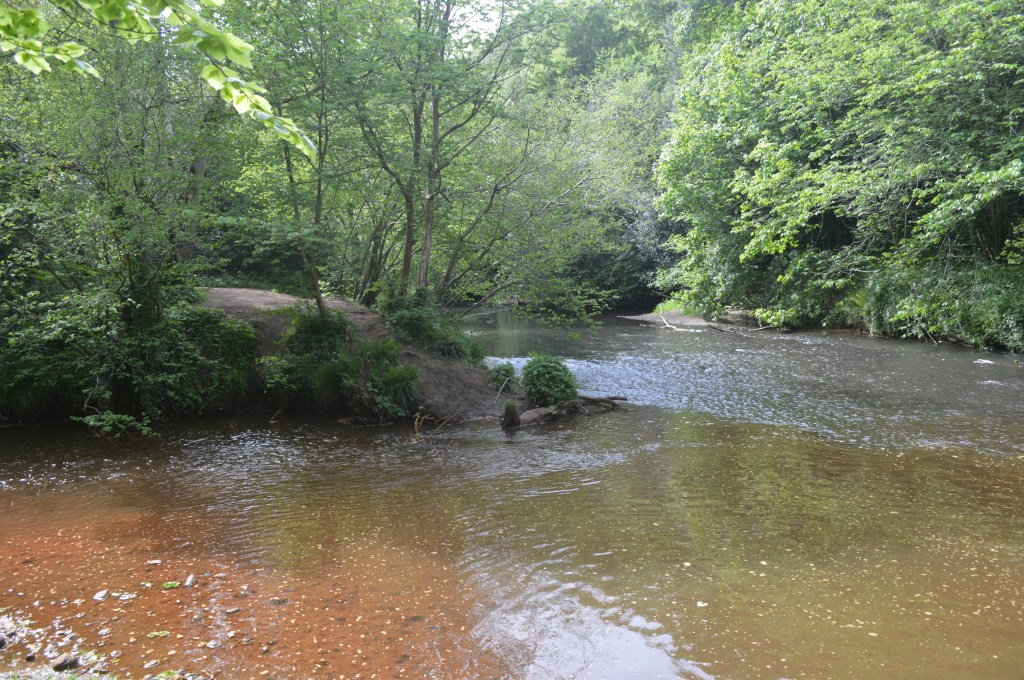
Meeting of the North and South Esk Rivers -
Walking and mental health

Going out for a walk is really a process of going into ourselves.
When done alone walking allows us to spend time in our own company away from daily distractions where we re-engage with something essential and vital to who we are. Only the present is ever real, and it is the present that takes shape and finds a focus as we stretch out and commit to an hour’s stroll or an afternoon walk or a full day’s hiking.
Once the day’s weather is reckoned with, we choose a walk to suit a purpose we are not always conscious of. A short testing pull up the side of a hill to burn off some bad feeling.
A quick spin around the local loch to sort out a problem or a long perambulation to somewhere remote and wild where something of the transcendent is sought. We learn after a while what works for us, what we need to do occasionally to sort ourselves out, or to boost our spirits or to just find the solitude we sometimes crave.
Part of this process is how walking can immerse us in the landscape and take us from ourselves when small events grab our attention to bring surprise and delight.
A heron stands erect at the water’s edge, beak poised ready to pounce. A buzzard hovers overhead, its distinctive call drawing your attention, a quick movement ahead sees a deer and its fawn cross your path and disappear into woodland.
These distractions are part of the walking experience, often taking us by surprise and shifting our focus to the present and the immediate. The process of walking itself, the simple effort of one foot before another, finding your own stride creates a rhythm and tempo that both creates and matches our mood.
We find a way to fit with the day and the feeling it brings. Do we create the day, or the day create us? A bit of both I suspect. Whichever it is, there is much more to walking than simply’ going out’.
-
An Introduction to Midlothian and The Borders…

Trains connect people to towns and cities, but they also connect us to places unknown and unvisited. New train services can open up and reveal those parts of a country often bypassed and unexplored by the motorist.
So it is with the Borders Railway. Opened in 2015, its success has exceeded expectations with passenger numbers above predictions and numerous return visitors. Running from Edinburgh to Tweedbank, close to Melrose, it passes through Midlothian before rising to Fala Hill in the Moorfoot Hills to begin its descent through the Scottish Borders.
It has a total of eleven stations with four of these sitting in Midlothian and three in the Borders. The line acts as a commuter service for Midlothian, less so for the Borders stations.
This is not so much a new line but the restoration of the much older Waverley Route, unceremoniously axed as part of the Beeching cuts in the 1960s leading to the Borders becoming the largest geographical area in the UK without a rail service. Its return a testimony to the determination and persistence of local campaigners.
The South of Scotland has now been awarded Best in Travel award for 2023 by Lonely Planet, who describe how ‘wise folk are well aware of its charms’. We hope this book helps you in your exploration of both the Borders and Midlothian where you too can connect with the many ‘charms’ both regions have to offer.
-
A Few Tales…
Deciding which routes to include in a book like this is a process of trial and error. We relied on OS maps, online searches and other walking guides to help orientate us and to allow us to work out possible routes.
What we quickly learnt however was that there is no substitute for feet on the ground. Trial and error meant just that and numerous attempts to find on the ground what existed on a map, or a website often led to long frustrating days trying to find the right path or to cross a river or working out how to get from one glen to the next.
While the right to roam is embedded in legislation it sits alongside the right to privacy. How this is experienced on the ground can often be frustrating and difficult to comprehend. One such encounter with the ‘law in action’ was attempting to bypass a grand hotel set within its own grounds.
After consulting our OS map and working out where we were, we finally identified a clear path running next to a field that would get past the hotel. It ran through a mixed woodland with views of the hotel opening up as we passed. Leaving it behind and convinced we had ‘cracked’ the route we came face to face with a barbed-wire fence slung across the path. A private house a good distance away had decided its privacy had been breached by walkers on too many occasions, thus so far but no further.
Undaunted, we retraced our steps to try outflanking the hotel from the other side. Again, good progress was made on a clear path to only again find our way impeded. Stumped, we were all set to scrub the route from our list. As a last resort we contacted the Midlothian Ranger Service who to their credit checked out the route reassuring us that there wasn’t a problem, and the path was open. Now completely bamboozled we shared our frustration with a friend over a beer. What happened next?
Well, after much head scratching, folding and unfolding of maps, checking which path turned where, where did we start from etc it turned out a third path existed further north from our second attempt. Once confirmed and checked we concluded that feet on the ground only get you so far, sometimes local knowledge and only local knowledge will do. Maybe the beer helped also!
-
Hello World!
Welcome to WordPress! This is your first post. Edit or delete it to take the first step in your blogging journey.
-
Review: Border Telegraph

This review was originally published in the Border Telegraph in November 2020
TWO friends have written a book about their favourite walks around the three Borders railway stations.
Galashiels residents Brian Gould and Forbes Shepherd have been walking together in the Borders for more than 20 years and were “keen” to pass on some of their knowledge about what the region has to offer.
Their book, Border Station Walks, contains 30 walks which all start and end in one of three train stations – Galashiels, Tweedbank or Stow.
“It was good fun,” said Mr Gould, when asked what it was like writing the book. “It is quite small but we didn’t just want to write a book describing how to get from A to B.
“We wanted to create a book that had some sort of personality to it.”
Mr Gould, 62, is a retired lecturer who previously taught at Edinburgh Napier University and he says the book includes the history of the area of each walk, as well as photographs and points of interest.
There are also details about the length of the journey, total ascent in metres, level of difficulty, and the terrain you will encounter.
“We wanted to describe the towns and what makes them unique in some way,” said Mr Gould.
“It comes from our own walking experiences.
“We describe the walk, the weather, all that kind of thing.
“There are a lot of references to Sir Walter Scott and the impact he had on the area too.”
The book promises to take the reader on a journey through the history of the region, “from the ancient tribes that left their mark in stone, to the remarkable religious heritage still visible in the landscape as well as the folklore and legends that excite the imagination”.
Mr Gould says they would be interested in writing another book about the Borders in the future.
The pair had hoped to explore beyond the Borders this summer, but the coronavirus pandemic put an end to their plans of walking abroad for now, although they are booked in to visit the Canary Islands in June.
-
Review: Southern Reporter
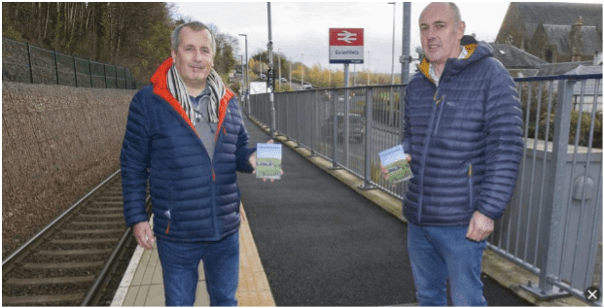
This review was originally published in the Southern Reporter in November 2020
Rail buffs print a ticket to walk in their shoes.
Borderers with boots made for walking are invited to celebrate the beauty and magnificence of routes between the region’s railway stations.
Walking buddies Brian Gould and Forbes Shepherd, both from Galashiels, have collaborated on an in-depth new guidebook, Border Station Walks, which highlights 30 walks that begin and end at Stow, Galashiels and Tweedbank stations.
It is aimed at both locals who want to re-explore areas on their doorsteps and the expected influx of new visitors to the region when the Great Tapestry of Scotland exhibition centre opens in their hometown next year.
Each walk has information detailing its length, ascent in metres, level of difficulty and the terrain you will encounter. Maps are also included and are linked to the text to help ease navigation.
Brian, a retired lecturer at Edinburgh Napier University, said: “This came about because we do a lot of walking and we did a blog back in 2017 of the walks and it was from that the idea for the book came. We have five walks from Stow, 11 from Gala, 11 from Tweedbank and three that go between the stations. The walks run between three and 19 kilometres, some are flat walks and others are much more challenging.
“What we really tried to do was to celebrate the local area, there’s a huge amount of additional information apart from the walks and we filter out the area’s history, its folklore and its culture as they match up with each walk. For those new to the locality a short history of the Borders is provided and throughout reference is made to the contribution Sir Walter Scott made in developing the area’s unique identity.”
Brian and Forbes, a retired council environmental health officer, believe that in these stressful times it has never been so important to strap on a pair of boots and enjoy the benefits of fresh air and exercise.

 Site Title